
What Every First-Time Safari Goer Should Know Before Visiting Tanzania
You’ve decided to do it. Tanzania. The Serengeti. The Great Migration. The Ngorongoro Crater at sunrise. Then reality sets in and the questions start piling up fast: Do I need a visa in advance? Which vaccines are actually required? What do I pack? How much is this really going to cost? Every first-time safari traveler hits this wall, and it’s completely normal.
So, what should a first-time safari goer know before visiting Tanzania? More than you might expect, but less than you’d fear. The team at Kisambi Tours fields exactly these questions from first-time American visitors every week, and the pattern is always the same. The people who arrive prepared have a genuinely incredible time. The ones who skip the details spend their first day scrambling. This guide covers everything a first-time safari traveler needs before stepping off the plane in Kilimanjaro or Arusha: entry documents, health prep, what game drives actually look like, and how to behave around wildlife.
What Every First-Time Safari Goer Should Know Before Visiting Tanzania: visa and entry requirements
Getting into Tanzania is straightforward for Americans, but there is one rule that catches people off guard every time. U.S. passport holders cannot use a standard single-entry tourist visa. American nationals traveling for tourism are required to obtain a multiple-entry visa, which costs $100 (as of June 2026, per Tanzania Immigration guidance) and is valid for up to 12 months with each stay capped at 90 days. You can apply through the Tanzania eVisa portal before you leave, or pick one up on arrival at major entry points. For the most current official entry details consult the Tanzania visa requirementsand see practical guidance on how to obtain a Tanzania e-visa for U.S. citizens.
Apply online well in advance. The eVisa portal has experienced intermittent downtime in early 2026, and official Tanzania Immigration guidance recommends submitting at least two months before travel. Your passport needs to be valid for at least six months beyond your arrival date, with at least one blank page. Bring a return or onward ticket, and be ready to show evidence of sufficient funds if asked at the border.
Two details that often get missed: travelers under 18 flying alone or with only one parent should carry a notarized parental consent letter along with copies of both parents’ IDs. And if Zanzibar is on your itinerary, you’ll need to show proof of travel insurance that meets Zanzibar’s entry requirements at the point of arrival, confirm those specifics against current official guidance before you fly, since requirements can be updated. It’s easy to arrange coverage online before departure.
Health prep before visiting Tanzania: vaccines, malaria pills, and what can’t wait
Most people delay the health prep portion until a few weeks before departure, which is a real mistake. Some vaccine series require multiple doses spaced weeks apart, and malaria medication needs to start before you arrive in Tanzania. Book a travel medicine clinic appointment at least four to six weeks before your departure date. Yes, it feels like homework, but it pays off the moment you’re sitting in that Land Cruiser at dawn. For a starter checklist on recommended shots and timing, see Immunizations Before Your Trip to Tanzania | Kisambi Tours.
The core vaccines recommended for a Tanzania safari include hepatitis A, typhoid, and hepatitis B, alongside keeping your routine shots current: MMR, Tdap, polio, flu, and COVID-19. Depending on your specific itinerary, your doctor may also discuss rabies pre-exposure prophylaxis, particularly if your trip includes extended time in rural areas or bush camps far from quick medical access. Your travel medicine doctor will look at your specific situation and travel plans and make the right call.
Malaria prophylaxis is strongly recommended for most Tanzania safari areas, particularly lower-elevation parks such as the Serengeti and Tarangire. Risk does vary by park and altitude, the highlands of Ngorongoro, for example, carry lower risk than lower-lying areas, so follow your doctor’s guidance based on your exact itinerary. Standard chemoprophylaxis options per CDC recommendations include atovaquone-proguanil (Malarone), doxycycline, mefloquine, or tafenoquine. Beyond the pills, daily DEET-based repellent and lightweight long-sleeve layers at dawn and dusk are habits every experienced safari traveler already uses.
Yellow fever is a common point of confusion. The vaccine is required only if you’re arriving from a country with yellow fever risk, or if you transited for more than 12 hours through an at-risk airport. Flying direct from the U.S. with a standard layover generally does not trigger the requirement. That said, carry your vaccination card regardless, because requirements can shift and some border agents ask for it anyway.
When to go for the best Tanzania safari experience
The most common question first-time safari travelers ask is when to visit, and the honest answer is that it depends on what you want to witness. There is no single “best month,” but there are clear windows that match different priorities.
The dry season from June through October is the most reliable window for game viewing overall. Vegetation is thinner, water sources concentrate wildlife into predictable spots, and both the Serengeti and Ngorongoro Crater deliver outstanding sightings during this period. Mornings are cold and afternoons warm up fast, so packing layers matters even if you’re traveling in July or August.
The Great Migration is not a single event that happens on one date, it’s a year-round cycle of movement across the ecosystem. June and July bring the Western Corridor stage, with herds pushing toward Grumeti River crossings. August and September deliver the northern Serengeti’s famous Mara River crossings, which tend to be the most dramatic. For a detailed month-by-month view of migration movements and timing, consult resources on the best time to visit the Serengeti. For a different angle entirely, late January through February around Ndutu offers calving season, when hundreds of thousands of wildebeest calves are born and predator activity reaches its highest intensity of the year.
The green season from November through May has real advantages worth knowing. Lodge rates drop significantly, crowds thin out, and birding reaches its peak. The trade-off is thicker vegetation that makes wildlife harder to spot, and roads can get muddy from March through May during the long rains. For budget-conscious first-timers with flexibility, November and early December offer a strong balance of quality sightings and lower costs.
What actually happens on a game drive (and what to expect)
Many first-timers arrive with documentary expectations: dramatic hunts unfolding every hour, nonstop action from the moment they climb into the vehicle. The real experience is richer than that, but it helps to understand the rhythm before you go.
Most safari days begin before sunrise. The early morning drive typically runs from around 6:00 to 10:00 a.m., though exact timing varies by operator and park, when animals are most active and the light is at its best for photography. For those focused on images, see Important Tips for Planning a Photography Safari in Tanzania for specific guidance on timing and camera gear. Midday is for returning to your lodge or camp, eating, and resting during the hottest hours. An afternoon drive usually runs from roughly 3:00 to 6:30 p.m. This pattern repeats daily across however many park days are on your itinerary. Drives happen in purpose-built 4×4 vehicles with a pop-top roof for standing and unobstructed sightlines.
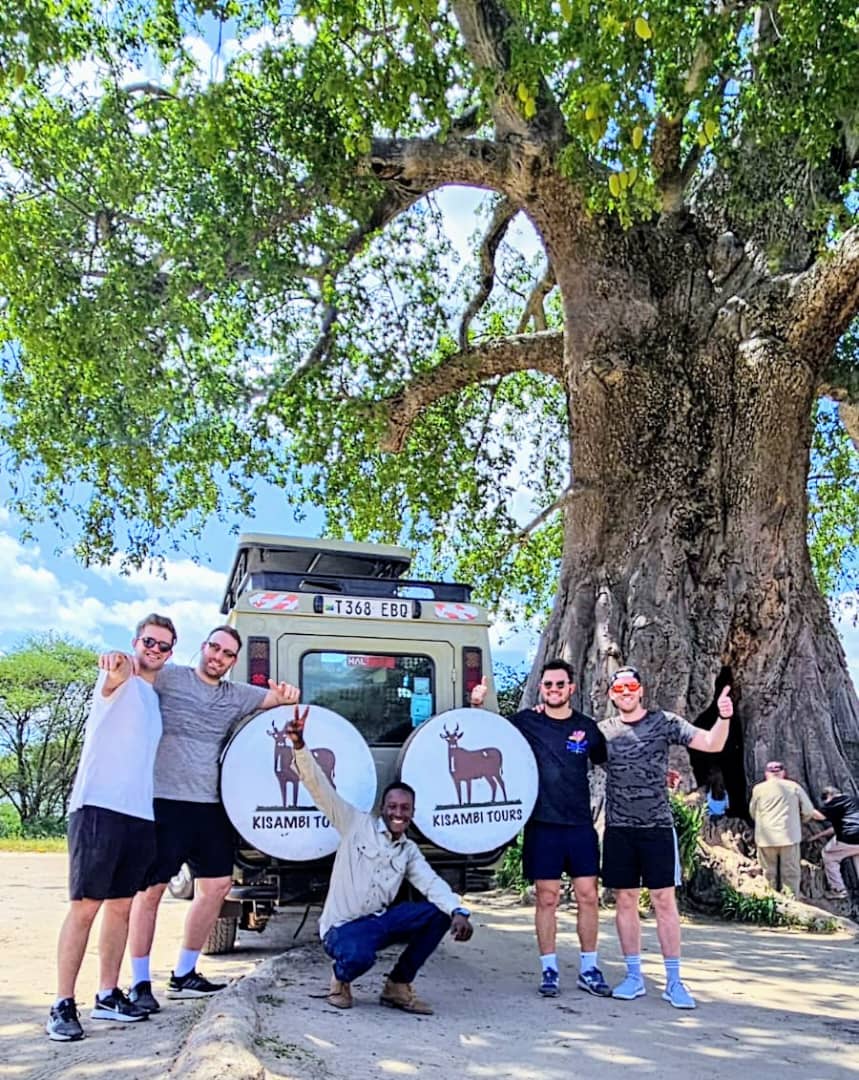
Some days the bush gives everything at once: lion cubs sleeping in the shade, a cheetah making a kill 30 meters off the track, elephant herds crossing the road at dusk. Other days require patience, and that patience is genuinely part of the experience. A knowledgeable local guide substantially influences what you see and understand out there, from reading animal behavior to knowing which areas are active on any given morning. At Kisambi Tours, guides bring deep familiarity with the Serengeti, Ngorongoro, Tarangire, and Lake Manyara ecosystems, and the team offers pre-trip briefings to help first-time visitors understand what each park offers before committing to an itinerary.
On the cost side, a 7-day Tanzania safari typically runs between $1,400 and $4,900 per person, depending on accommodation tier. Park fees of $70 to $83 per person per day are sometimes excluded from entry-level quotes, so always confirm what your package includes before booking. Budget an additional $25 to $30 per person per day for guide and camp staff gratuities, and factor in $500 to $1,150 per person if you choose to fly between parks rather than drive. For a breakdown of typical pricing and what drives cost differences, see a practical guide to Tanzania safari costs.
What to pack for a week in the bush
Now that you know what to expect in the field, let’s make sure you’re physically ready for it. The goal with safari packing is to go light and go practical. This is not the trip to bring your full wardrobe, every item you pack should justify being there.
Clothing comes down to layers and neutral tones. Pack two to three pairs of lightweight pants and three to four long-sleeve shirts in khaki, olive, tan, or grey. Add a fleece or light jacket for early mornings and a packable rain layer for unexpected showers. Bright colors and white clothes are genuinely impractical in dusty game drive conditions. Closed-toe shoes handle bush walks comfortably, and a sun hat plus a lightweight scarf or buff protects your face and neck from dust on open vehicle drives. For a detailed checklist, refer to the Tanzania Safari Packing List and an alternate perspective from an industry packing guide at what to pack for a Tanzania safari.
For camera gear, a zoom or telephoto lens outperforms a wide-angle for wildlife at distance. Bring at least two fully charged batteries, two to three memory cards with ample storage, and a solid pair of binoculars. Tanzania uses Type D and G outlets at 220 to 240V, so pack a universal travel adapter and a 10,000 to 20,000 mAh power bank. Charging access on safari vehicles is unreliable, and you do not want to miss a sighting because your camera died at 6:00 a.m.
Keep all prescription medications and malaria pills in your carry-on, never in checked luggage. A compact first-aid kit with antiseptic, blister pads, and anti-diarrheal medication covers most common situations. Note that pharmacies in remote park areas are limited, so source your medical kit at home. Add electrolyte sachets for long drive days in the heat, sunscreen, SPF lip balm, and hand sanitizer. That covers the essentials.
Safari etiquette and cultural respect every first-time safari traveler should know
There are behavioral expectations on safari that experienced travelers treat as non-negotiable but that rarely appear in booking confirmations. Knowing them before you go makes your experience better and protects the wildlife and communities you’re visiting.
Your guide will deliver a safety briefing before entering any park. Those rules exist for serious reasons. Stay seated during game drives unless your guide explicitly says otherwise. Keep your voice low when close to wildlife, avoid sudden movements, and never extend arms or legs outside the vehicle in the presence of predators. These guidelines apply equally to everyone in the vehicle, and disregarding them disrupts sightings for the entire group.
Off the game drive, Tanzania is a culturally conservative country in many areas. Dress modestly when visiting villages or markets. Always ask permission before photographing people, especially Maasai community members in cultural visit settings. A few words of Swahili go a surprisingly long way: “asante” (thank you) and “habari” (how are you) are immediately appreciated and tend to open genuine conversations.
Don’t pressure your guide to close the distance to an animal for a better shot. If your guide has maintained a respectful distance, that judgment is based on reading animal behavior, not caution for its own sake. Flash photography around wildlife is a firm no, especially at night. Beyond etiquette, it poses real risk to nocturnal animals, and abrupt movements near predators carry consequences that no photograph is worth. Patient photography from a thoughtful distance consistently produces the best images anyway.
You’re more prepared than you think
Here’s what every first-time safari goer should know before visiting Tanzania, distilled to its core: the logistics are genuinely manageable, and preparation makes all the difference. Get your multiple-entry visa application submitted early. Book your travel medicine clinic appointment at least six weeks out. Once that’s handled, choose your travel window based on what you most want to experience. Pack in layers with neutral colors, bring the right power gear, and keep medications in your carry-on. And understand what game drives actually look like before your first morning alarm goes off at 5:30 a.m.
Tanzania rewards prepared travelers with some of the most extraordinary wildlife experiences on earth. Kisambi Tours works specifically with first-time American visitors, offering pre-trip briefings to walk through any of this in detail, build a personalized itinerary, and answer the questions that always come up after reading guides like this one. Reaching out costs nothing, and arriving prepared makes every moment in the bush feel like exactly what you came for.