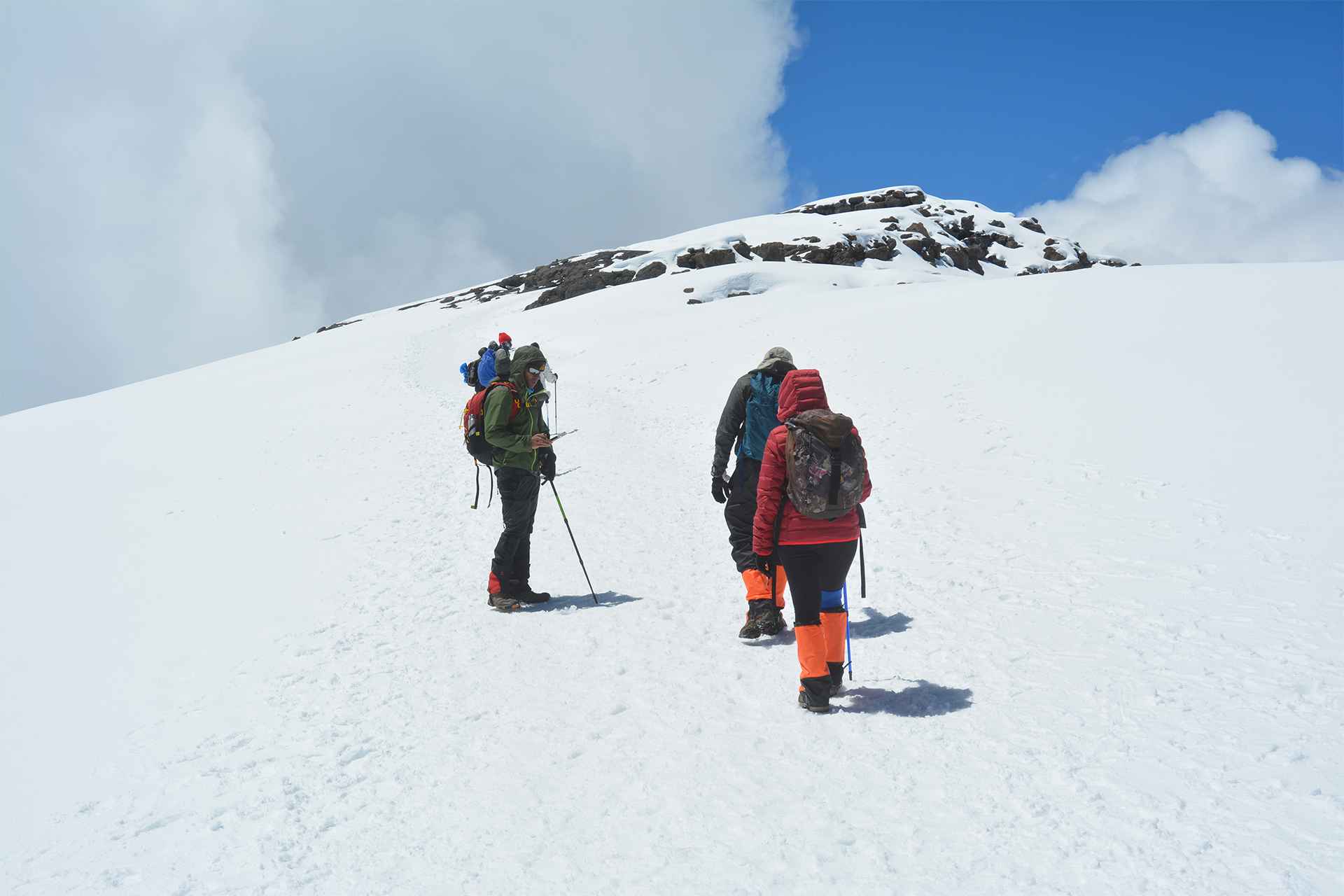
Choosing the wrong Kilimanjaro climbing routes is the single biggest factor in whether you reach the summit or turn back. That’s not an exaggeration. Climbers arrive fit, motivated, and well-geared, only to fail because their itinerary didn’t give their bodies enough time to adjust to altitude. Seven main routes exist on this mountain, Lemosho, Machame, Marangu, Rongai, Rongai, Umbwe, Shira, and the Northern Circuit, and each one has its own character, daily terrain, duration, and summit success rate. What works brilliantly for one person can set another up for a miserable turnaround at 18,000 feet.
At Kisambi Tours, we guide climbers on all the main Kilimanjaro climbing routes year-round from our base here in Tanzania. We see the same avoidable mistakes repeatedly: people booking the shortest option to save a day or two, or picking a route based on a single photo without understanding what the trade-offs actually are. This guide gives you the full, honest picture so you can make a decision that fits your fitness, your schedule, and what you actually want from this climb.
Kilimanjaro climbing routes: full comparison at a glance
Every route on Kilimanjaro starts on a different slope, climbs through different ecosystems, and delivers a different summit-day experience. The table below gives you the essential numbers in one place so you can quickly see where each route stands before diving into the details.
What the comparison table covers
| Route | Duration (days) | Difficulty | Summit Success Rate | Accommodation | Best For |
|---|---|---|---|---|---|
| Marangu | 5, 6 days | Moderate | ~27% (5-day) / 44, 65% (6-day) | Huts | Those who can’t camp |
| Machame | 6, 7 days | Moderate, Hard | 73, 85% | Camping | Fit beginner-to-intermediate trekkers |
| Lemosho | 7, 8 days | Moderate | 85, 90%+ | Camping | Most climbers, best all-around route |
| Rongai | 6, 7 days | Moderate | 70, 85% | Camping | Quieter climb, northern approach |
| Umbwe | 6, 7 days | Very Hard | ~60% | Camping | Experienced high-altitude trekkers only |
| Northern Circuit | 9 days | Moderate | ~95% | Camping | Maximum success, solitude, full experience |
Those success rate numbers deserve a closer look. The biggest driver behind them isn’t which route you pick, it’s how many days your itinerary includes. A longer trip gives your body more time to adjust to lower oxygen levels, and that adjustment makes or breaks your summit attempt. For a deeper external breakdown of reported summit numbers, see Kilimanjaro success rates. For our own side-by-side route analysis, consult Kilimanjaro Routes Compared: Difficulty, Days, and Summit Odds.
The one factor that changes everything: acclimatization days
The core principle of altitude climbing is “walk high, sleep low.” Your body needs repeated exposure to increasing elevations, followed by descents to lower camps overnight, to produce enough red blood cells for the thin air near the summit. Routes with more days build this in naturally. That’s exactly why a 9-day Northern Circuit reaches a roughly 95% success rate while the same climber on a 5-day Marangu sits at just 27%. To learn practical steps you can use in your planning, read our Best Acclimatization Strategies for Kilimanjaro Climbers.
This isn’t about fitness. Elite athletes fail on short itineraries all the time because cardiovascular conditioning doesn’t override altitude physiology. Most operators recommend a minimum of 7 days for better summit odds, 8 days is better still, and 9 days gives you the best chance on the mountain.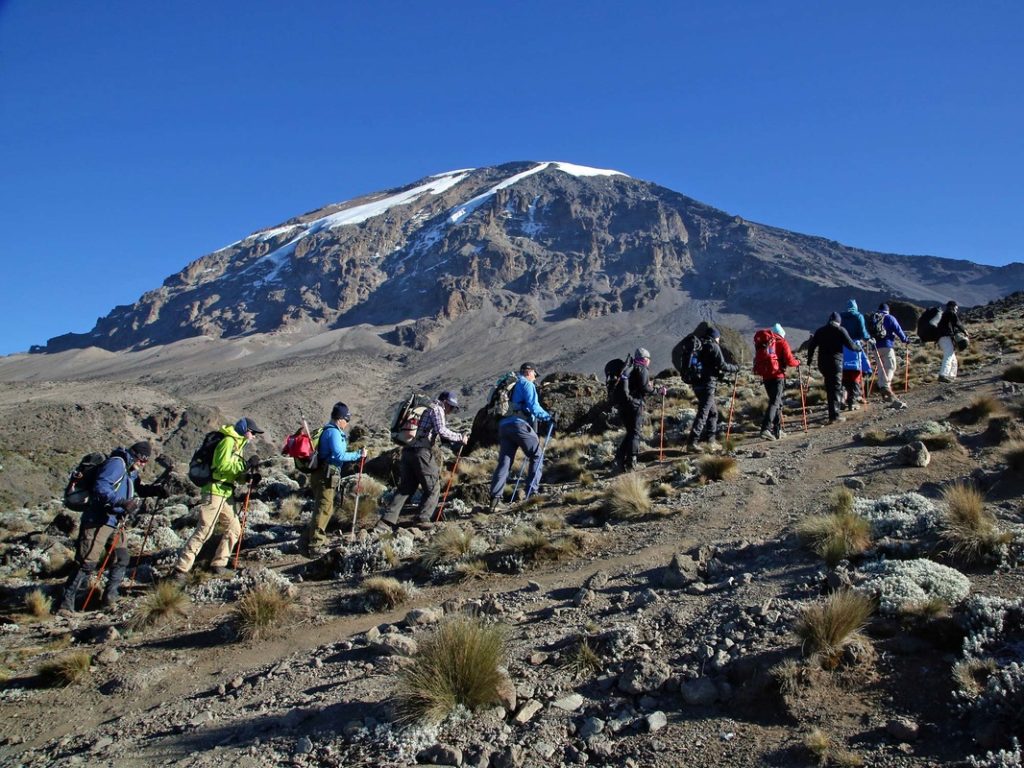
The two most popular routes: Machame and Marangu compared
Machame and Marangu are among the most commonly booked Kilimanjaro climbing routes, but they offer very different experiences. Understanding what each one actually feels like on the ground will help you decide whether either of them fits your situation.
Machame route: scenic, challenging, and worth it
Machame is the most popular camping route on Kilimanjaro, and it earns that reputation. The 6- to 7-day itinerary crosses five distinct ecosystems, dense rainforest, open moorland, high alpine desert, and rocky volcanic ridges, with dramatic views of the southern ice fields along the way. On a 7-day Machame, you can expect a summit success rate in the range of 85%. Daily hiking averages about 5, 7 hours on varied terrain, with some long days that include significant elevation gain and loss. This route suits fit beginner-to-intermediate trekkers who want both strong summit odds and a visually rewarding climb. For an external route-specific overview, see this detailed Machame route guide.
One honest trade-off with Machame: it’s busy. During peak season from June through October, you’ll encounter other groups at every major campsite. That shared energy can be motivating, but if solitude matters to you, this isn’t the quietest option on the mountain.
Marangu route: the hut option with real trade-offs
Marangu is the only route on Kilimanjaro with dormitory-style hut accommodation, which makes it the most comfortable option on paper and generally the least expensive because camping logistics are eliminated. The trade-off is significant: at 5, 6 days, it’s the shortest standard itinerary on the mountain, and the success rates reflect that directly. On a 5-day Marangu, roughly 27% of climbers reach the summit. On the 6-day version, that figure rises to somewhere between 44% and 65%.
If you choose Marangu, only book the 6-day version. The 5-day option is simply too short for most people’s bodies to adapt, regardless of fitness level. It’s also worth knowing that Marangu receives substantial traffic, especially in peak season. The “easier” reputation draws crowds, and because the ascent and descent follow the same path, you’ll be passing other groups going both directions throughout the climb.
Routes built for summit success: Lemosho and Northern Circuit
If getting to Uhuru Peak is your top priority, these two routes are in a different category. Both are longer, more gradual, and give your body more time to adapt. They also happen to be two of the most scenic options on the mountain.
Lemosho route: the best all-around option for most climbers
Lemosho is the gold standard for combining scenery, acclimatization, and summit success. The route starts at Lemosho Gate on the western slope at 2,134 meters, climbs through ancient rainforest onto the open Shira Plateau, and delivers some of the most varied and dramatic landscapes on Kilimanjaro before joining the summit approach from the south. On an 8-day itinerary, success rates reach 90% or above. Daily hiking runs about 5, 8 hours on terrain that’s technically straightforward for fit trekkers. For more Lemosho-specific information, see this external Lemosho route resource.
The 8-day version includes an extra acclimatization night at Karanga Camp (4,040 meters) before the final push to Barafu, and that extra day makes a measurable difference. If you’ve never climbed at altitude and you can only pick one route, Lemosho is the answer. It’s not the least expensive option, typically running $2,800, $4,000 through a reputable operator, but investing in more days directly translates to better summit odds.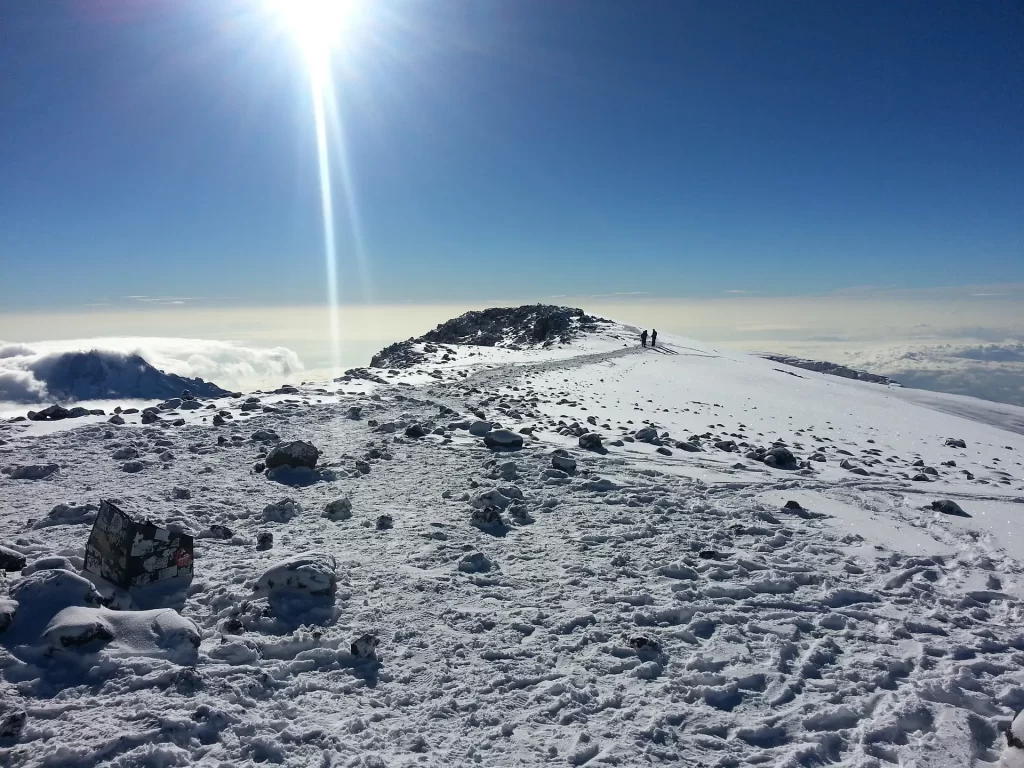
Northern Circuit: maximum acclimatization, maximum solitude
The Northern Circuit is Kilimanjaro’s longest route at roughly 98 kilometers over 9 days. It starts the same way as Lemosho but then diverges north, circling around Kibo Peak’s rarely visited northern face before approaching the summit from the east. That northern section is arid, remote, and genuinely different from anything you’ll see on the more popular southern routes. Wildlife sightings, including eland and buffalo, are possible on this section, and the near-360-degree views of the mountain itself are unmatched.
The 9-day itinerary produces a summit success rate of around 95%, the highest of any route on the mountain. Crowds are minimal because fewer climbers and operators run it, and the cost reflects the extended logistics, ranging from $3,800 to $6,500 or more. If your schedule allows a full 9 days and you want the best possible summit odds alongside a genuinely remote experience, this route stands in a category of its own.
Two routes for specific types of climbers: Rongai and Umbwe
These routes aren’t for everyone, but for the right climber, they’re the best fit on the mountain. Knowing when each one makes sense will help you rule them in or out quickly.
Rongai route: the quiet northern approach
Rongai is the only route that approaches Kilimanjaro from the north, starting near the Kenyan border. The terrain is gentler on the ascent, the route receives significantly less rainfall than the southern approaches, and it’s far quieter than either Machame or Lemosho during peak season. On a 7-day Rongai, success rates reach around 85%. The total distance is approximately 74 kilometers, and the daily hiking is generally less demanding than Machame on a per-day basis. For explicit distances on each approach, see this external breakdown of Kilimanjaro routes with mileage.
Rongai is a strong alternative for anyone who wants solid summit odds without the crowd factor, or for climbers who have concerns about steep terrain and prefer a more gradual day-by-day elevation gain. The route descends via the Marangu trail on the eastern slope, so you’ll see two different sides of the mountain across the full trip.
Umbwe route: steep, fast, and unforgiving
Umbwe is the shortest and most challenging route on Kilimanjaro at just 48 kilometers total. It climbs the southern slope almost directly, with steep, technical sections and very little time built in for acclimatization. Even on a 6- to 7-day version, success rates hover around 60%, making it statistically riskier than every other option on this list. This route appeals to experienced high-altitude trekkers looking for a physical challenge, not first-time Kilimanjaro climbers.
If you’re comparing Umbwe to any other route here, the other route is almost always the smarter choice. The only scenario where Umbwe makes sense is if you have prior high-altitude climbing experience and you’re specifically seeking a harder, faster ascent. Otherwise, the lower success rate doesn’t justify the trade-off.
Which Kilimanjaro climbing routes match your goals?
You now have the data. The decision comes down to three variables: how many days you have, what your fitness level is, and what you want most from the climb.
Matching your available days to the right route
Start with your calendar. If you have 9 days, book the Northern Circuit. If you have 7, 8 days, Lemosho is the top pick, with Rongai as a solid, quieter alternative. If you have 6, 7 days, Machame or Rongai both work well with proper fitness preparation. If you genuinely only have 5, 6 days and can’t extend the trip, book the 6-day Marangu and accept that your odds are lower. No amount of training compensates for an itinerary that’s too short for your body to acclimatize.
Balancing scenery, crowds, and summit odds
Here’s the quick summary: Lemosho for the best combination of scenery and summit success. Machame for a popular, well-rounded experience with great views and solid odds. Northern Circuit for solitude and the highest success rate on the mountain. Marangu only if camping isn’t an option, and only on the 6-day version. Rongai for a quieter climb with reliable success rates. Umbwe only for experienced high-altitude trekkers who want a serious challenge.
If you’re still unsure after going through all of this, the best next step is talking to someone who has guided climbers on all of these routes and can factor in your specific situation. That conversation will narrow it down quickly. For guidance on how to choose with your priorities in mind, see our detailed piece on How to Choose the Best Kilimanjaro Trekking Route.
What a guided climb includes and how to get the right route advice
Booking a Kilimanjaro climb isn’t just choosing a route. Understanding what a reputable package actually covers protects you from operators who cut corners in ways that affect your safety and summit odds.
What a reputable guided climb covers
A properly priced guided climb for a 7-day route runs between $2,500 and $4,500 per person through a reputable operator. That price should include park and camping permits, a licensed head guide and assistant guides, porters, a cook, all meals on the mountain, tents, purified water, and emergency rescue coverage. Park authority fee schedules show that permits alone can exceed $1,180 per person on an 8-day climb. Industry guidance and fair-wage references from organizations like KPAP suggest that any operator quoting under $1,500 is likely cutting corners somewhere, whether on permits, porter wages, safety equipment, or guide qualifications. Use that number as your baseline filter when comparing operators.
Tips for guides and porters are standard and expected, running approximately $250, $400 extra for the full crew across the climb. Budget for this separately when calculating your total trip cost.
Getting personalized route advice from a local expert
Kisambi Tours is a Tanzania-based operator that guides climbers on all the main routes: Marangu, Machame, Lemosho, Rongai, Umbwe, and the Northern Circuit. Because our team lives and works in Tanzania year-round, we give route recommendations based on your actual fitness level, available days, and what you want most from the experience, not on which package has the highest margin. We’re not a foreign booking platform marking up a local operator’s services; we’re the local operator, which means you get direct communication, authentic insider knowledge, and straightforward pricing without a middleman layer.
Before you finalize anything, it’s worth a conversation with someone who has walked every one of these paths and can match you to the right one. Reach out to the Kisambi Tours team for a free, no-pressure consultation and a personalized recommendation based on your specific situation.
The right route is waiting for you
The best Kilimanjaro climbing routes aren’t the most famous ones on social media. The right route is the one that fits your body, your schedule, and what you actually want from this experience. Acclimatization time matters more than any other single factor in whether you stand at Uhuru Peak or turn back short of it. Choose a route with enough days built in, work with a team that knows the mountain from the inside, and your odds of standing at 5,895 meters shift dramatically in your favor.
When you’re ready to stop researching and start planning, the Kisambi Tours team is here. We’ll match you to the right Kilimanjaro climbing routes for your schedule and experience level, walk you through what to expect day by day, and handle every logistical detail, from permits to porters, so you can focus entirely on the climb. Contact us to start your Kilimanjaro conversation today.