
How many months in advance should i start preparing for a kilimanjaro climb? The most common mistake climbers make when preparing for Kilimanjaro isn’t choosing the wrong gear or the wrong route. It’s showing up undertrained because they assumed six weeks of jogging would be enough. Kilimanjaro is Africa’s highest peak, and while it doesn’t require technical climbing skills, it demands serious aerobic endurance, typically five to nine days of sustained uphill hiking at elevations between 8,000 and nearly 20,000 feet. That takes real time to build.
So how many months in advance should you start preparing for a Kilimanjaro climb? For most people, two to three months is the bare minimum if you’re already reasonably active, three months is the common baseline recommendation, and three to six months is the smarter target for anyone starting from lower fitness. The exact number depends on two things: your current fitness level and the route you choose. The rest of this article breaks that down month by month so you leave with a concrete Kilimanjaro preparation plan you can start today.
How many months in advance should i start preparing for a kilimanjaro climb?
There’s no single answer that fits every climber, but the range is well-established. Reputable operators and wilderness medicine guidance consistently point to three to six months as the practical Kilimanjaro training timeline for most people, with outliers on both ends depending on how active you already are.
If you’re already active
Climbers who hike regularly, run, or maintain consistent cardio can realistically compress their preparation into about three months. Someone who already hikes with a loaded pack on weekends and has strong aerobic fitness needs roughly 8 to 12 weeks of mountain-specific training to be genuinely ready. That means adding weighted hiking, back-to-back long days, and significant elevation gain to an existing base rather than starting from scratch.
If you’re starting from low or moderate fitness
For climbers who are lightly active or returning to exercise, four to six months is the realistic window. The first six to eight weeks are spent building a general cardiovascular base before any Kilimanjaro-specific training can be layered on. Trying to compress this into eight weeks risks arriving undertrained, which directly reduces your summit odds. Six months gives your body time to adapt progressively and recover without injury along the way.
Your Kilimanjaro training timeline: 6 months out
Six months out is not too early. This phase is one many climbers skip entirely, often because the climb feels abstract that far out. The two priorities at this stage are locking in your trip and beginning your aerobic base.
Book before peak season fills up
The dry season runs from June through October, and the most popular routes fill fast during that window. Some operators have departures that sell out many months in advance during peak periods. Booking with a locally registered Tanzania operator like Kisambi Tours at the six-month mark is a reliable way to secure your preferred route and departure date before availability tightens. Kisambi Tours offers all major routes, Lemosho, Machame, Rongai, and the Northern Circuit, with personalized planning support from your very first inquiry. Waiting until three months out often means settling for a route or date that wasn’t your first choice.
Start your base fitness and vaccinations
At six months out, training doesn’t need to be intense. The goal is building an aerobic foundation: three to four days of cardio per week, with at least one longer weekend hike carrying a daypack. This is also the time to visit a travel medicine clinic. Tanzania vaccinations, including typhoid, hepatitis A, and hepatitis B if needed, have specific timing requirements:
- Hepatitis B series: ideally starts six to eight weeks before departure
- Typhoid oral vaccine: two doses spaced one to six weeks apart, with the final dose at least seven days before exposure
Starting at six months out gives you a full buffer to handle all of it without rushing. For official guidance on recommended immunizations and timing, consult resources on vaccinations for Tanzania.
Your Kilimanjaro training schedule: 3 months out
At the three-month mark, preparation shifts from general fitness to Kilimanjaro-specific conditioning. The focus moves to weighted hiking, elevation gain, and back-to-back long days that simulate what the mountain actually demands. This is where your Kilimanjaro fitness plan takes its most structured shape.
There are many practical approaches and common misconceptions about Kilimanjaro training; reading a few experienced operator guides on smart Kilimanjaro training strategies can help you prioritize the right sessions and avoid wasted effort.
Your weekly training structure
A practical weekly structure looks like this:
- Two weekday sessions of stair climbing or incline treadmill work, carrying a 15-pound pack for 35 to 45 minutes each
- One easy aerobic day for active recovery
- One or two weekend hikes with increasing elevation gain
By month two of this phase, weekend hikes should reach four to six hours with a 20-pound pack on terrain that includes real elevation gain. If you don’t have mountains nearby, back-to-back stair or incline sessions on Saturday and Sunday simulate the multi-day fatigue that summit week creates. A StairMaster with a loaded pack is the best gym-based substitute for actual trail climbing, but real hiking on uneven terrain is still superior when you can access it.
Fitness benchmarks to hit before you fly
Three concrete targets tell you whether your acclimatization training for Kilimanjaro is on track, and these benchmarks are more predictive of summit success than gym fitness alone, because Kilimanjaro is sustained uphill hiking at altitude, not a sprint or a gym circuit:
- Hike four to six hours continuously while carrying a 20-pound pack without significant distress
- Gain roughly 3,000 feet of elevation in a single day hike and recover well enough to hike again the following morning
- Complete back-to-back hiking days at least once per month during this training phase
How your route choice adjusts your preparation timeline
Not every route demands the same lead time. Understanding the difference helps you set the right Kilimanjaro training schedule before spots fill up.
Shorter routes require an earlier, more focused start
The five-day Marangu route gives the body the least time to acclimatize on the mountain, which means your fitness and altitude readiness need to be higher from day one. If you’re planning Marangu, lean toward the six-month preparation timeline, even moderately fit climbers should allow more lead time, since the shorter itinerary leaves less room for your body to catch up on the trail. The same logic applies to a six-day Machame itinerary. Less built-in acclimatization time on the mountain means your body needs to arrive better conditioned, with no margin for adjusting on the go. For route-specific timing and summit push breakdowns, see How Long It Takes to Climb Mount Kilimanjaro to the summit?
Longer routes provide more buffer but don’t replace training
The seven-day Machame, eight-day Lemosho, and seven-day Rongai routes build in more acclimatization days, which is consistently linked to higher summit success rates. These routes are more forgiving for climbers with strong aerobic bases, which is why Kisambi Tours often recommends them to first-time climbers. A longer route reduces the chance that poor acclimatization becomes the limiting factor, but it does not reduce the need for solid pre-trip fitness. Train seriously regardless of route, just let the route choice inform how much buffer you have if altitude hits you hard on the climb. For additional reading on acclimatization approaches, review practical acclimatization strategy guides.
 The final month: what to check off before you board
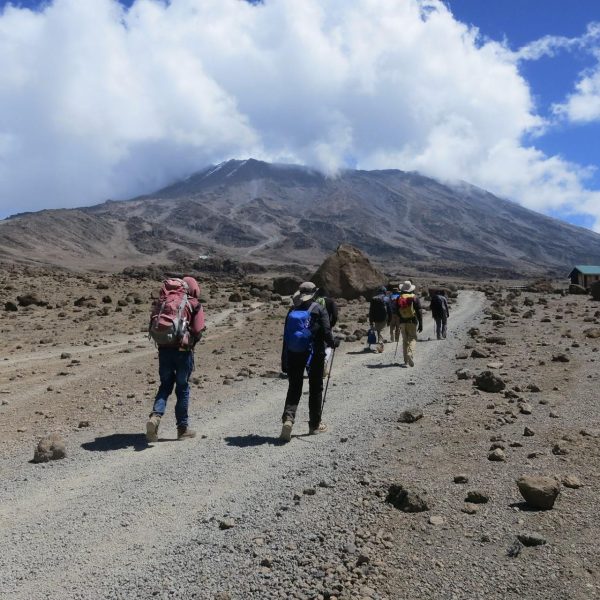 The final month: what to check off before you board
One month out, the heavy training work is done. This phase is about testing gear, finalizing medical prep, and confirming every logistic so summit week has zero surprises.
Gear shakeout and pack weight
Every piece of gear should be worn and tested on a real hike before departure, not just tried on in the living room. Do at least two full-load hikes this month with your summit layer system, boots, trekking poles, and headlamp to confirm fit and function. Your boots especially must be fully broken in. Blisters from new footwear are one of the most preventable reasons climbers struggle on lower slopes. Your personal daypack on the mountain typically carries 15 to 20 pounds; the rest goes to your porter. Confirm pack weight targets with Kisambi Tours and make any final gear swaps now, not at the airport. For practical packing and pre-trip tips, see Kilimanjaro Tips.
- Summit layer system: base layer, mid-layer fleece, heavy down jacket, hard-shell outer
- Sleeping bag rated to at least -20°C (-4°F) with a thermal liner
- Waterproof, high-cut trekking boots broken in over multiple hikes
- Two pairs of gloves: light liner gloves plus heavy insulated outer gloves
- Trekking poles and a headlamp with spare batteries
Medical prep, Diamox, and final admin
Visit your doctor or travel medicine clinic this month to discuss acetazolamide (Diamox) if you haven’t already. According to CDC guidance, acetazolamide is a well-supported option for reducing altitude sickness severity, and the Wilderness Medical Society also endorses its use for AMS prevention. The standard dosage is 125 mg twice daily, starting one to two days before your ascent. Many guides recommend a trial dose two weeks before departure to check for side effects like tingling in the fingers or an unusual taste in carbonated drinks. Your doctor can confirm the right dosage based on your weight and health history, so don’t wait until the week before your flight to start that conversation. For further practical advice about dosing and common experiences, read more about Diamox on Kilimanjaro. Also consider reviewing safety guidance such as Is Climbing Mount Kilimanjaro Safe for You? before you depart.
Also confirm that your travel insurance covers emergency high-altitude evacuation. Regarding Tanzania entry requirements, check current visa rules directly with the Tanzanian government or the U.S. State Department before your trip, as policies can change. Make sure Kisambi Tours has all your final trip details confirmed: arrival times, dietary requirements, and any medical information the team needs to support you on the mountain.
Your Kilimanjaro preparation plan, summarized
If you’re asking how many months in advance should i start preparing for a kilimanjaro climb, here’s the short version: six months out is when you book your climb, choose your route, and get vaccinations started. Three months out is when real, Kilimanjaro-specific training begins, weighted hiking, elevation work, and back-to-back long days. One month out is when you fine-tune gear, confirm medical prep, and lock in every logistic so nothing catches you off guard on summit day.
The climbers who reach the summit aren’t always the fittest people on the mountain. They’re the ones who prepared with enough lead time to build genuine endurance, tested every piece of gear before arriving, and chose an itinerary with the right acclimatization profile for their body. That combination is what puts you on top.
If you haven’t locked in your route and dates yet, the smartest first step is reaching out to a local Tanzania operator who can match your fitness level and timeline to the right itinerary. Kisambi Tours works directly with climbers from the first inquiry through summit day, local expertise, all major routes, no intermediaries. Start that conversation now while your preferred departure dates are still available.